
Edge AI and TinyML Deployment Guide: Quantizing and Running Neural Networks on ARM Cortex-M MCUs
Practical engineering walkthrough for deploying deep learning models on resource-constrained microcontrollers. Explains INT8 post-training quantization, TensorFlow Lite for Microcontrollers (TFLM), and vibration anomaly detection.

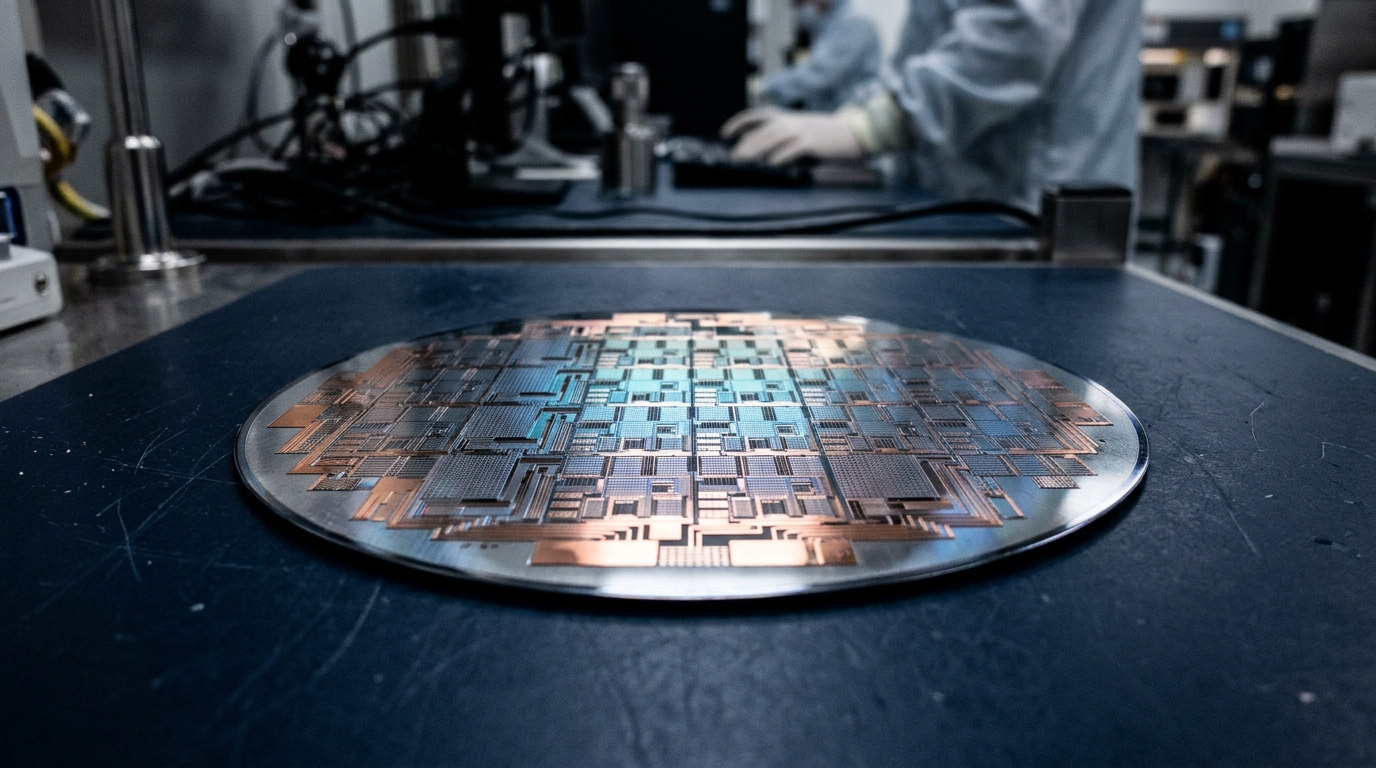
Edge AI and TinyML Deployment Guide: Quantizing and Running Neural Networks on ARM Cortex-M MCUs
TinyML brings artificial intelligence directly onto microcontrollers operating with tens of kilobytes of SRAM and milliwatts of power. By processing sensor telemetry locally at the edge, embedded systems achieve zero cloud latency, immunity to network outages, and guaranteed user data privacy.
1. The Resource Constraints of Edge Microcontrollers
While cloud AI models run on GPUs with hundreds of gigabytes of VRAM, typical microcontrollers (e.g. ARM Cortex-M4 / Cortex-M7 on STM32 or ESP32) offer between 64 KB to 512 KB of SRAM and 512 KB to 2 MB of Flash ROM. Standard float32 weights must be compressed through pruning and quantization.
2. Post-Training Quantization (FP32 to INT8)
Quantization maps continuous 32-bit floating point weights and activations into 8-bit signed integers (-128 to 127):
real_value = scale * (quantized_value - zero_point)
Memory Footprint: 8-bit integer weights consume exactly 4x less Flash storage than 32-bit floats.
Execution Speed: ARM Cortex-M processors equipped with CMSIS-NN utilize DSP SIMD instructions (e.g., SMLAD - Signed Multiply with Accumulate Dual) to compute four 8-bit MAC operations per clock cycle.
Accuracy Preservation: Carefully calibrated INT8 models typically maintain over 98-99% of original floating-point accuracy.
3. Real-World Application: Industrial Vibration Anomaly Detection
In industrial predictive maintenance, an accelerometer sampled at 1.6 kHz on a motor housing feeds FFT spectral features into a lightweight 1D Convolutional Neural Network or Autoencoder. If reconstruction error exceeds a dynamic threshold, an immediate maintenance alert is triggered via RS-485 or LoRaWAN before catastrophic bearing failure occurs.
Technical Discussion (0)
Sign in with your EIHOUSE INDIA account to join the technical discussion.
Sign In to CommentNo comments yet. Be the first engineer to contribute to this discussion.